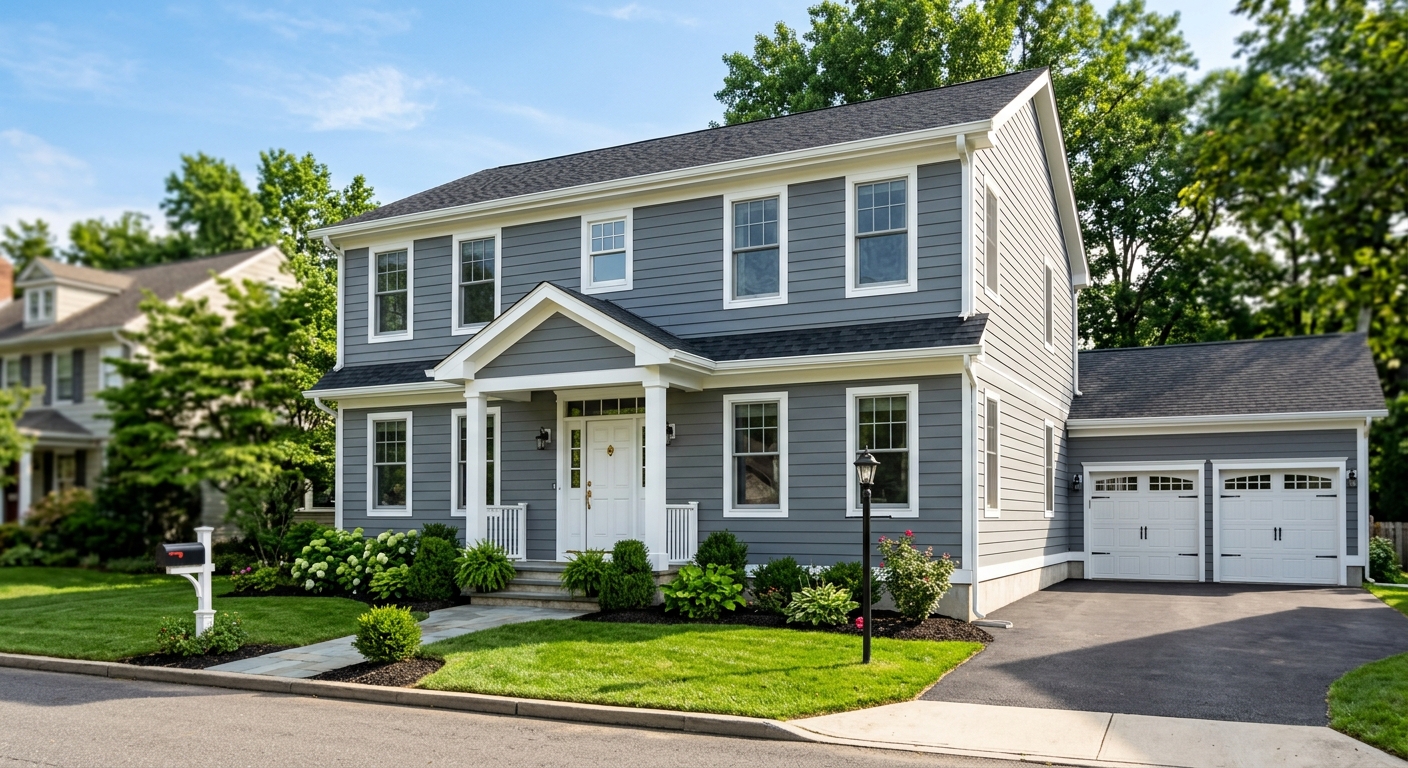
Painting options and costs in Turner Valley
Turner Valley is a small, tight community where painting demand spikes when the weather cooperates. With 33.0% of local homes built before 1981, many homeowners are dealing with older trim, denser siding, and layers of previous DIY touch-ups—so prep work (scraping, patching, caulking, stain-blocking and priming) often takes more time than people expect. That matters because Calgary’s exterior season is weather-dependent: in our region, workable exterior conditions typically run from mid-May to late September, when daytime highs are reliably above 10°C and surfaces can dry properly. When we’re ready to paint, we’re also managing rain chances and overnight lows that can slow cure. In practice, that short window makes scheduling tighter and peak-season pricing firmer than shoulder months.
Labour availability can also shift with summer demand across the Calgary region, including areas around Turner Valley where access is a bit more varied—newer builds near the town edge can be straightforward, while older properties on split-levels or with mature landscaping often require more protection, ladder time, or lift/scaffold planning. For many homeowners with single-detached houses (84.7% of dwellings in the area), the biggest cost driver is the amount of prep needed before any top-coat goes on.
Below are typical ranges to help you compare options, whether you’re planning a full interior refresh or repainting the exterior siding, trim and soffits.
| Service |
What's Included |
Typical Duration |
Price Range |
| Interior — whole home (walls, ceilings, trim) |
Move/cover items as needed, protect floors, patch/sand, caulk where required, prime repaired areas, paint walls and ceilings, prime/paint interior trim (baseboards, casing), clean-up. |
5–10 days |
$2,000–$8,000 |
| Interior — per room (standard bedroom or living room) |
Protect areas, patch/sand, prime as required, paint walls and ceiling, optional light trim touch-ups (baseboards/casing as quoted). |
1–3 days |
$500–$2,500 |
| Exterior — full house (siding, trim, soffits) |
Power wash, scrape/sand loose paint, caulk gaps, prime bare/spot areas, address failed coatings as needed, paint siding and trim/soffits, protect plants/windows as required, final clean-up. |
2–4 weeks (weather-dependent) |
$4,500–$9,000 |
| Exterior — trim and accent colours only |
Surface prep on trim/accents, prime bare spots, caulk where needed, paint trim and selected accent surfaces, protect surrounding siding and landscaping. |
1–2 weeks (weather-dependent) |
$2,500–$5,800 |
| Kitchen cabinet painting (doors, frames, spray finish) |
Degrease and degloss, remove/label doors when applicable, repairs as needed, bonding primer, spray finish on doors/frames, hardware touch-up, re-install, protective care instructions. |
1–2 weeks (plus dry time) |
$1,200–$4,800 |
| Specialty / faux finish (accent wall, texture) |
Surface prep for texture/faux system, layering and feathering, protective topcoat, clean-up and detailing at edges. |
1–4 days |
$600–$3,800 |
Prices are estimates only and vary by project scope, site access and material selection.
What affects the price of painting in Turner Valley
Even for the “same” job, quotes across Calgary and the wider Alberta market can swing by 30–50% because painting is mostly labour and prep. Contractors with different crew sizes, prep standards, and paint systems price the same surface differently—especially when previous owners have done spot repairs, nicotine/drywall patches, or DIY coats over questionable adhesion. On exteriors, the weather-driven schedule is a major reason for variability: in the Calgary economic region, the workable window for exterior painting is roughly mid-May to late September, when conditions stay above 10°C and allow proper drying and cure. In contrast, coastal BC can be longer in calendar terms, but humidity and rainfall mean stricter mildew-resistant product choices and more careful timing, which can raise material and labour time. In Turner Valley, the short season concentrates demand, so peak scheduling pressure often tightens availability and firms up rates.
Older homes also change the cost equation. With 33.0% of houses built before 1981 (Statistics Canada, 2021 Census), it’s common to see older trim profiles, chalking paint, and caulking that’s failed—prep can become 50–70% of labour on a repaint. For example, if a full exterior is priced in the $4,500–$9,000 range, adding more scraping/priming on bare spots and repointing around joints can push the same house toward the upper band. Similarly, interior whole-home pricing in the $2,000–$8,000 band can move significantly if ceiling height, patch volume, and trim coverage increase time—often more than changing paint brand. A common cost driver in Turner Valley is also access: houses with mature hedges, steep driveways, or multi-level layouts require more protection and ladder/lift time.
| Price Factor |
Why It Matters |
Cost Impact |
| Surface prep — scraping, sanding, patching drywall or wood |
Adhesion depends on what you fix and clean; bad prep leads to peeling/blistering. |
Often +20% to +60% on repaints |
| Number of coats — 2-coat system over primer vs. 1 coat over existing |
Coverage and hide power; dark-to-light or stain-bearing surfaces require more steps. |
Can swing several hundred to multiple thousands |
| Paint quality tier — contractor-grade vs. premium (Benjamin Moore, Sherwin) |
Premium lines typically provide better durability and better coverage, reducing rework risk. |
Roughly +5% to +25% |
| Ceilings and trim — adds significant time vs. walls-only |
Ceilings need tighter control and more detail; trim demands extra cutting-in and sanding. |
Often +15% to +40% |
| Exterior season window — short season raises summer rates |
Weather dependency increases scheduling risk and crew mobilization costs. |
Peak-season can add +10% to +25% |
| Lead-safe precautions — required for pre-1978 homes with lead paint |
When lead is present, controls (wet methods, HEPA vacuuming, proper disposal) add labour. |
Commonly +5% to +20% depending on conditions |
| Surface material — drywall vs. plaster vs. wood vs. stucco |
Different substrates require different primers and prep techniques. |
Can be +10% to +50% |
| Height and access — multi-storey exterior requires scaffolding or lifts |
Access equipment and safety time increase labour and schedule demands. |
Often +15% to +45% |
Permits & regulations in Alberta
In Alberta, painting itself typically does not require a municipal permit—regular interior repainting and exterior coating work is generally handled through normal contractor permits only when another trade or structural change is involved. For homes built before 1978, health guidelines recommend testing for lead paint before sanding or scraping, and following lead-safe work practices if lead is present. This isn’t usually a legal “homeowner permitting” step for DIY, but it is standard practice for professional contractors to reduce airborne dust and avoid improper disposal.
Work that commonly does not require a permit: rolling/brush painting of ceilings, walls and trim; exterior repainting where no structural changes or major envelope alterations are made; applying primer and top-coats; caulking gaps and repainting affected areas. Work that may trigger other requirements (not for “painting permits” themselves, but because of the scope) includes any major demolition, drywall replacement tied to building code upgrades, or work involving electrical/plumbing access.
To protect yourself in Turner Valley, verify licensing, insurance and coverage before the first day on site:
1) Licensing: confirm the contractor’s Alberta licence listing (where applicable) via the provincial registry page relevant to their trade category. 2) Liability insurance: request a current certificate of insurance naming you as certificate holder/with additional insured wording if the contractor supports it, and check the policy dates and limits. 3) WSIB/WCB coverage: request proof of workers’ compensation coverage (clearance letter or confirmation documentation) so you’re not exposed if a worker is injured. Finally, insist on a written contract that clearly states paint brands/lines, sheen, number of coats, primer requirements, and the exact prep (patching, sanding, scraping scope, and caulking) included.
Interior vs exterior painting — getting the best result in Turner Valley
In Turner Valley, long-lasting paint isn’t about “buying the most expensive can”—it’s about matching prep and coating systems to how surfaces actually fail here. Interiors mainly fail due to inadequate prep and poor adhesion at patch areas. Filling, sanding and spot-priming are usually more important than the topcoat brand. Sheen choice also impacts durability and cleanability: kitchens and hallway traffic typically do better with an eggshell or satin (depending on the product system), while bathrooms may need a dedicated moisture-tolerant interior system. A flat wall sheen can look great, but it scuffs more easily; higher sheen doesn’t hide flaws as well, so the right balance is critical. As a rule, two coats applied over a proper primer after repairs outlast one thick coat over patched or unprimed areas—especially where patch compound has different porosity than surrounding drywall.
Exteriors fail differently: freeze–thaw cycles, UV exposure, hail impacts and wind-driven rain stress coating films and joints. That’s why caulking before painting is crucial to prevent water ingress and to stop rework where cracks open after cure. Primer selection matters by substrate—wood and older composites may need bonding primers when adhesion is uncertain, and the primer should be compatible with the finish coat. While mildew resistance is a bigger headline in coastal climates, Alberta still benefits from systems designed for local weather swings and wash-down durability. For pre-1978 homes, lead-safe precautions are part of doing the job right when sanding or scraping is required.
Cabinet painting is a realistic “budget alternative to replacement,” but only when the prep is done: degreasing, deglossing, bonding primer and a properly catalysed or durable finish. For context, repainting a typical interior whole-home might fall in the $2,000–$8,000 range; a well-prepped kitchen cabinet project can be a smaller “zone” spend around $1,200–$4,800 and can deliver a bigger visual upgrade per dollar than trying to push a full exterior refresh on the same budget.
| Project Type |
Key Prep Step |
Recommended Coats |
Price Band |
| Interior — fresh drywall (new construction) |
Moisture/porosity management: prime all drywall to seal and smooth. |
2 coats (primer + 2 top-coats where needed) |
$1,000–$5,500 |
| Interior — repaint (good condition, no repairs) |
Clean/degloss lightly and spot-prepare edges and scuffs. |
2 coats |
$400–$3,200 |
| Interior — repaint (patching and priming needed) |
Patch/sand plus spot-prime repaired areas for uniform sheen/absorption. |
2 coats over primer on repairs (often 2 full coats) |
$800–$6,500 |
| Exterior siding (wood or fibre cement) |
Scrape/sand loose paint, caulk joints, prime bare areas. |
2-coat system (primer + 2 top-coats where required) |
$4,500–$9,000 |
| Exterior trim and accents only |
Surface prep on trim, prime bare/spot areas, protect siding edges. |
2 coats over primer where required |
$2,500–$5,800 |
| Kitchen cabinets (spray finish) |
Degrease, degloss, bonding primer and controlled spray coats. |
2–3 coats finish depending on colour and coverage |
$1,200–$4,800 |
How to choose a painting contractor in Turner Valley
Start by verifying coverage and credentials so you’re protected if something goes wrong. In Alberta, ask for (1) proof of appropriate trade licensing/registration for their work category (where applicable—your contractor should provide the reference and contact info), (2) liability insurance certificate showing current policy dates and adequate limits, and (3) WSIB/WCB workers’ compensation coverage. For each, request documents directly from the contractor, confirm dates, and ensure the certificate reflects your project address if offered.
Next, get 2–3 itemised written quotes rather than lump sums. You want line items showing labour and materials, and a clear scope for prep (scrape/sand, sanding drywall, patching, caulking, primer type). Confirm whether permits are handled (often not needed for painting alone, but the quote should still confirm what is and isn’t included), and whether disposal is included for scraping debris and packaging. For quality, ask about warranty: workmanship warranty length for prep and coating adhesion, product/manufacturer warranty details, and whether warranty coverage transfers if you sell the home.
Payment schedule matters. A fair approach is 10–15% upfront at most, with the remainder tied to milestone completion (priming and first coat verified, then finish-coat completion). Avoid large upfront deposits, especially on exterior projects where weather delays can affect timeline. Ask for an estimated start date and completion window in writing—particularly for exteriors, where Turner Valley’s summer weather can change the work sequence.
- Request scope in writing: prep methods, sanding level, and which areas receive primer.
- Confirm paint brand and specific line (not just “premium paint”).
- Ask for sheen schedule by room (flat/eggshell/satin/semi-gloss) and wall condition.
- Verify lead-safe plan for pre-1978 homes if sanding/scraping is required.
- Confirm caulking plan: where they caulk and whether it’s before prime/topcoat.
- Check whether power washing and surface cleaning are included for exteriors.
- Ask how they protect landscaping, windows, and siding edges (taping/covering methods).
- Make sure furniture moves/covering is included for interior work.
- Confirm number of coats per surface and what triggers additional coats.
- Ask about ventilation and dust control inside occupied homes.
- Confirm cleanup and disposal are included (scrape debris, empty containers).
- Get warranty terms in writing and ask who you contact if there’s a failure.
Red flags I see in Turner Valley include: quotes that skip prep details (especially scraping/priming), vague paint descriptions (“premium” only), no proof of liability insurance or workers’ compensation coverage, an aggressive deposit request (beyond 10–15%), and no written timeline for start/completion—particularly risky for exterior painting when weather can compress schedules.
Frequently asked questions — painting in Turner Valley
Do I need to worry about lead paint in an older Turner Valley home?
In Turner Valley and throughout Alberta, if your home is pre-1978, it’s smart to treat lead paint as a possibility before any scraping or sanding. The local housing profile shows that 33.0% of homes were built before 1981 (Statistics Canada, 2021 Census), so your likelihood of encountering older coatings is real. For homeowners, there isn’t usually a “permit” step for testing, but lead-safe work practices are strongly recommended: wet methods to minimize dust, HEPA vacuuming if sanding is unavoidable, and proper disposal. A professional contractor should be able to explain their approach, including how they isolate work areas, protect HVAC return paths, and what happens if test results indicate lead-containing paint. If you’re planning exterior scraping around trim, that’s the moment to confirm your contractor’s plan.
How long does it take to paint a house?
Interior timing depends on room count, prep complexity and cure time. A good benchmark is 5–10 days for a whole-home interior (walls, ceilings and trim), assuming typical access and reasonable patch volume. For a single room, many projects land around 1–3 days. Exterior timelines are longer because weather dictates drying and cure: in the Calgary region, workable exterior conditions often run from mid-May to late September with daytime highs above 10°C. That means a full exterior repaint commonly takes 2–4 weeks (sometimes longer if rain or cooler nights slow drying between coats). If you’re starting in peak summer, you also need to plan for schedule coordination—lots of homeowners want their exterior work done before the season tightens.
What's the difference between paint quality tiers?
Paint quality tiers mostly affect coverage, durability and how forgiving the product is during roller/brush application. Contractor-grade coatings can be perfectly fine for refreshed interiors, especially when the surface is already in good condition and prep is right. Premium lines from major brands typically provide better hide, better washability, and stronger resistance to scuffs and early wear—important for high-traffic areas. On exteriors, quality matters because UV exposure, wind-driven rain and freeze–thaw cycles stress the coating film; better systems often reduce the chance of premature peeling or early chalking. That said, you’ll get the biggest real-world difference from matching the primer and sheen to the substrate and room use. If you’re choosing between quotes, ask what brand/line is included and whether the quote specifies primer type and number of coats.
How do I compare painting quotes?
To compare quotes in Turner Valley fairly, look past the final totals and compare scope and prep. Ask each contractor to list labour and materials separately, and confirm what’s included for scraping, sanding, patching drywall, caulking, and priming bare areas. Make sure the number of coats is stated per surface and that primer is included where repairs or bare substrate are involved. For example, exterior full-house pricing commonly sits in the $4,500–$9,000 band, but the difference between two quotes is often prep: one contractor may price a “clean and paint” plan, while another includes additional scraping and bonding primer where coatings are failing. For interiors, whole-home estimates can range broadly—up to the $2,000–$8,000 band depending on ceilings, trim coverage and patching. If a quote is missing these details, it’s not truly comparable.
What paint sheen should I use in different rooms?
Sheen choice should balance cleanability with how well the paint hides wall imperfections. In most Turner Valley homes, a flat/low-sheen finish is often used for low-traffic ceiling areas (unless the product is specifically designed for scuff resistance). Walls in living rooms and bedrooms are commonly eggshell or satin for easier wipe-down without making every patch and texture look obvious. Kitchens and hallways generally do better with satin or washable eggshell because they handle grease and fingerprints better. Bathrooms typically need coatings suited for moisture conditions. Trim and doors usually benefit from semi-gloss or higher for durability and wipeability. When comparing quotes, ensure the contractor specifies sheen per surface—especially if patches and sanding are part of the scope.
Can I paint my house exterior in spring or fall in Turner Valley?
You can paint in spring or fall in Turner Valley only if temperatures and drying conditions meet the product requirements. In the Calgary region, exterior work is typically planned for mid-May through late September when daytime highs are reliably above 10°C and surfaces can dry properly between coats. Spring can be too cool or too wet early in the season, and fall nights can slow cure even if days look warm. That’s why many crews book earlier slots in peak summer: the short weather window forces scheduling pressure. If you want the best balance, plan for weather-friendly start dates and confirm the contractor’s process for rain and overnight lows. A good contractor will also match the coating system to Alberta conditions (UV and freeze–thaw stress) rather than relying on calendar timing alone.