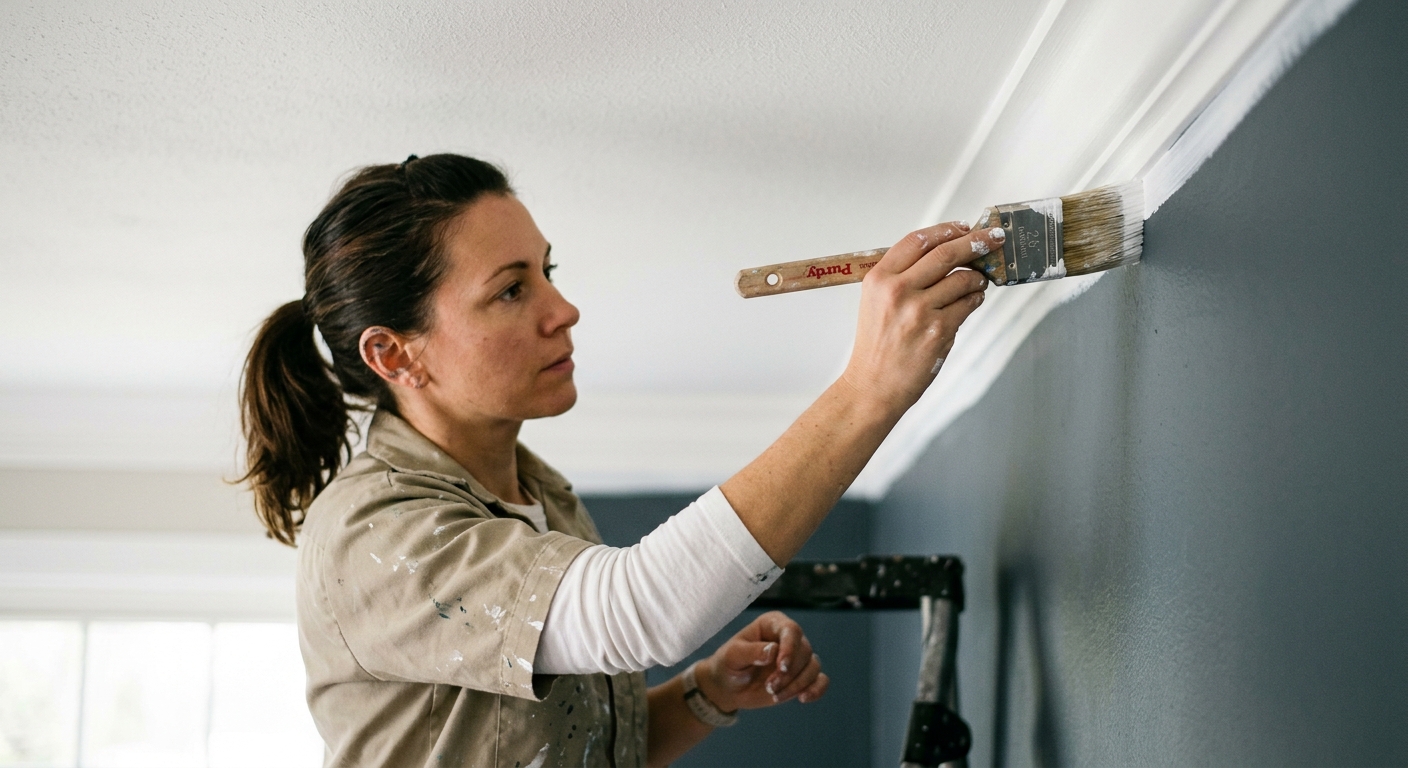
Painting options and costs in Lower Mount Royal
Lower Mount Royal has its own mix of older, established homes and newer builds, so painting quotes can feel unpredictable until you compare what’s included. With a small local population (2,990 people in Lower Mount Royal, per the 2021 Census), neighbourhood demand tends to concentrate around the same summer window, and scheduling can tighten quickly for exteriors. Just as importantly, many houses in the Calgary area were built from the 1960s–2000s; for pre-1978 buildings, you may need extra surface preparation and lead-safe work practices before sanding or scraping. That kind of prep work—scraping loose coating, patching cracks, caulking gaps, and priming stains—drives a big portion of the final labour cost.
On the exterior side, the Calgary region’s workable season typically runs from about mid-May to late September, when daytime highs reliably stay above 10°C so coats can dry properly. That short window compresses demand and often means firmer pricing in peak months. Exteriors here also face strong UV and freeze–thaw cycles, plus occasional hail impacts, so contractors typically specify durable acrylic systems and elastomeric or flexible coatings where appropriate. If you’re in the more established pocket closer to 19 Street SW and the inner-city commute routes, crews often prioritize those repeat-client areas because access and staging can be efficient—leading to faster starts when the schedule lines up.
To help you budget, here are realistic options and typical durations, then we’ll break down what moves the price up or down.
| Service |
What's Included |
Typical Duration |
Price Range |
| Interior — whole home (walls, ceilings, trim) |
Surface prep (patching/sanding), caulking where needed, primer as required, two coat finish on walls/ceilings, paint protection for floors, and brush/roller trim work; minor scuff sanding on existing trim unless noted |
5–12 working days |
$2,000–$6,500 |
| Interior — per room (standard bedroom or living room) |
Prep and two coat coverage on walls; either ceiling included or allowance for walls-only based on scope; light trim touch-up; cleanup of dust and paint drips |
1–3 working days |
$400–$1,600 |
| Exterior — full house (siding, trim, soffits) |
Pressure wash/rinse as required, scraping and sanding, patching and caulking, stain-blocking where needed, primer system selection by substrate, two coat exterior finish with elastomeric/flexible treatment at joints where specified |
7–18 working days |
$2,500–$9,000 |
| Exterior — trim and accent colours only |
Surface cleaning, spot scrape/sand, patch and caulk at transitions, spot-prime bare areas, two coat finish on selected trim elements |
3–8 working days |
$1,200–$4,500 |
| Kitchen cabinet painting (doors, frames, spray finish) |
Degreasing/cleaning, sanding profile, bonding primer where needed, spray finish for doors and frames, replacement of minor hardware as noted, protective topcoat for durability |
6–15 working days (plus dry/cure time) |
$800–$7,000 |
| Specialty / faux finish (accent wall, texture) |
Prep and base coat, specialty texture/application steps, topcoat for uniform sheen and cleanability; masking and protection for adjacent surfaces |
2–7 working days |
$600–$6,000 |
Prices are estimates only and vary by project scope, site access and material selection.
What affects the price of painting in Lower Mount Royal
In Lower Mount Royal and the wider Calgary region, it’s common to see the “same” painting project come in 30–50% apart between quotes. The difference usually isn’t the paint brand—it’s how much surface preparation is needed, how many labour-hours your house demands (ceilings, trim density, access), and what product system the contractor plans for Alberta’s freeze–thaw cycles and intense UV.
For exteriors, the season is tightly climate-bound in the Calgary region. While Alberta isn’t as damp as coastal BC, crews still need working temperatures typically above 10°C and suitable drying conditions during application. That’s why quotes cluster: peak-season slots book fast, and summer scheduling pressure tends to raise labour rates compared with shoulder months. By contrast, contractors in longer-season markets may spread demand out, though they often face different product requirements. In our market, older housing across Calgary (including Lower Mount Royal) means more prep. On repaints, scraping, patching, caulking, and priming can represent 50–70% of total labour—especially when previous DIY coats are thick, flaking, or inconsistent in adhesion.
Two real examples that change cost in the Lower Mount Royal area: (1) a home with pre-1978 trim that needs lead-safe prep usually requires additional controls before sanding or scraping, which adds time before the first topcoat; and (2) a multi-storey exterior with soffits and railings can require scaffolding or lifts, raising both labour and staging costs. On price bands, you might see a move from the lower end of exterior painting (around $2,500–$9,000) toward the mid-to-high range if prep and access are heavier, while interior repainting can sit near $400–$8,000 depending on ceiling height, trim volume, and whether repairs are required.
| Price Factor |
Why It Matters |
Cost Impact |
| Surface prep — scraping, sanding, patching drywall or wood |
Prep determines adhesion and long-term durability; failing paint usually starts here. |
Can add 20–60% depending on damage and previous coating condition |
| Number of coats — 2-coat system over primer vs. 1 coat over existing |
Coverage and uniformity are controlled by true coat build, not “spotting.” |
Typical shift of 10–25% when switching from thin coverage to full 2-coat system |
| Paint quality tier — contractor-grade vs. premium (Benjamin Moore, Sherwin) |
Better products often level better, hide more per coat, and last longer under UV. |
Often 5–15% difference in material-driven cost for similar scopes |
| Ceilings and trim — adds significant time vs. walls-only |
Ceilings need extra edging, protection, and careful roller/brush control; trim increases masking. |
Can increase interior labour by 15–40% on trim-dense homes |
| Exterior season window — short season raises summer rates |
Limited suitable temperatures compress schedule; crews price for availability and planning risk. |
Can shift exterior labour by 10–30% within summer |
| Lead-safe precautions — required for pre-1978 homes with lead paint |
Special controls, HEPA vacuuming, wet methods, and disposal add labour steps. |
Commonly adds noticeable time; can move projects toward the higher end of exterior bands |
| Surface material — drywall vs. plaster vs. wood vs. stucco |
Different substrates demand different primers and adhesion prep. |
Primer system changes can add 5–20% depending on substrate condition |
| Height and access — multi-storey exterior requires scaffolding or lifts |
Access planning affects safety, staging time, and productivity. |
Can add thousands on larger, taller facades |
Permits & regulations in Alberta
For painting work in Alberta, you typically do not need a permit to paint your home. The work is about compliance with safe work practices and, where relevant, lead-safe procedures—not about municipal permits for standard interior or exterior coats.
What does require attention is lead paint risk: for homes built before 1978, health guidelines recommend testing for lead paint before sanding or scraping. If lead is present, lead-safe work practices should be followed (wet methods to reduce dust, HEPA vacuuming, proper containment, and disposal). This isn’t generally “homeowner-licensed” enforcement in the way many contractors treat it, but reputable professionals treat it as standard practice because it protects occupants and workers.
Before any work starts in Lower Mount Royal, confirm your contractor carries the right protections: liability insurance and WSIB/WCB coverage for workers. Ask for a certificate of insurance and proof of workers’ compensation coverage (or clear confirmation they have it). Then lock details into writing: paint brand and sheen, number of coats, primer type(s), and the exact prep work included (scraping/sanding levels, caulking, patching, stain-blocking, and whether repairs are billed separately).
Step-by-step check: (1) request and review their insurance certificate—make sure it matches the legal business name; (2) ask for WSIB/WCB clearance or coverage confirmation; (3) check Alberta licensing/registry information online using the business name to ensure it matches; and (4) require a written contract that specifies scope and exclusions.
Interior vs exterior painting — getting the best result in Lower Mount Royal
In Lower Mount Royal, the biggest reason paint fails early is rushing prep or choosing a coating system that doesn’t match how Alberta moves—temperature swings, UV exposure, and freeze–thaw effects that stress caulks and joints. For interiors, surface prep beats “premium brand” every time. Filling and sanding, addressing stains properly with the right primer, and caulking where necessary create the smooth, stable base. Sheen choice also matters: flatter finishes hide wall imperfections, while kitchens/bathrooms typically benefit from more scrub-friendly sheens such as satin or semi-gloss on trim. And while it can be tempting to do one thick coat, two coats over a proper primer usually outlast one coat because it maintains consistent film build and uniform sheen.
For exteriors, the prep standard is even more critical. Proper cleaning, scraping only what needs removing, sanding feather edges, and caulking before topcoat helps prevent water ingress at joints—an especially common failure point during Alberta’s freeze–thaw cycles. Primer type should match substrate (e.g., wood vs. drywall-like fibre cement surfaces vs. previously painted areas), and the topcoat should be temperature-stable and buildable under summer conditions. Unlike coastal BC, we’re less focused on year-round mildew, but hail impacts and UV still require durable acrylic systems and flexible coatings at transitions.
Kitchen cabinet painting is often the best value alternative to replacement when you want a fresher look without tearing out hardware and counters. If your cabinet finish is solid and the structure is sound, cabinet repainting can land in the interior specialty band of roughly $800–$7,000, and the cost difference is justified because you’re paying for prep and spray-finish quality rather than full replacement labour and waste. For pre-1978 homes, keep lead-safe precautions in mind for any sanding or scraping of trim and doors.
| Project Type |
Key Prep Step |
Recommended Coats |
Price Band |
| Interior — fresh drywall (new construction) |
Seal and prime evenly (especially joints and patch areas), then sand smooth for adhesion and uniform sheen |
1 primer + 2 finish coats |
$1,200–$4,500 |
| Interior — repaint (good condition, no repairs) |
Light scuff-sand and degrease, then spot prime only if needed |
1–2 finish coats depending on coverage |
$400–$2,800 |
| Interior — repaint (patching and priming needed) |
Patch, sand feather edges, stain-block or spot prime repairs to prevent flashing |
1 primer + 2 finish coats |
$900–$8,000 |
| Exterior siding (wood or fibre cement) |
Scrape/sand properly, address bare spots, and caulk joints before topcoat |
1 primer + 2 exterior finish coats |
$2,500–$9,000 |
| Exterior trim and accents only |
Feather edges and spot-prime bare and chalky areas, then caulk transitions |
Spot primer + 2 finish coats |
$1,200–$4,500 |
| Kitchen cabinets (spray finish) |
Degrease thoroughly, sand to promote adhesion, and use a bonding primer where required |
Primer + 2 finish coats (spray for smoothness) |
$800–$7,000 |
How to choose a painting contractor in Lower Mount Royal
Choosing the right painter in Lower Mount Royal is mostly about verification and clarity. First, confirm Alberta coverage: ask for their certificate of liability insurance (and verify the business name matches the quote and contract). For workers’ compensation, request proof of WSIB/WCB coverage (or documentation that they are correctly registered and insured for employees). If they can’t provide documents promptly, treat it as a quality and risk red flag.
Next, get 2–3 itemised written quotes. “Itemised” should mean labour and materials broken out enough that you can compare prep time, number of coats, primer type(s), and what’s included for ceilings, trim, caulking, and cleanup. Watch for hidden exclusions like moving furniture (or protection only), patching drywall beyond small holes, disposal fees, or whether they include masking and floor protection for open-concept rooms.
Warranty matters too: request the workmanship warranty length in writing and ask whether it covers peeling, flashing, and adhesion failure. Also ask about manufacturer warranties for paint products—some are conditional on prep and application requirements. Clarify whether warranties are transferable if you sell your home.
Payment schedule should be conservative: never pay more than 10–15% upfront. Use a holdback until the final walk-through and touch-ups are complete. Finally, demand a written timeline with a stated start date and completion estimate, especially for exterior projects where rain and overnight lows can delay drying and recoat times.
- Request proof of liability insurance (certificate) before signing.
- Verify WSIB/WCB coverage and confirm they have insured workers.
- Get Alberta licence/registry details that match the business name on the contract.
- Ask for an itemised quote: labour hours, primer type, number of coats, and paint system tier.
- Confirm exactly what prep is included (scraping, sanding, patching, caulking, stain-blocking).
- Clarify disposal: does the quote include debris removal and wrapping/proper disposal?
- Ask whether they include permits if any are required for your specific situation (most painting does not require a permit in Alberta).
- Confirm surface protection: floors, fixtures, landscaping protection for exterior.
- Check if they use moisture/temperature guidance for exterior recoat timing.
- Request the proposed sheen schedule (walls vs. ceilings vs. trim) and where scrub-friendly finishes are used.
- Review warranty terms for workmanship and product; get it in writing.
- Confirm payment terms: 10–15% max deposit, with a holdback until final inspection.
Red flags in Lower Mount Royal: (1) quotes that don’t spell out the number of coats and primer requirements; (2) a contractor who dismisses surface prep as “optional” for speed; (3) refusal to provide insurance and WSIB/WCB documentation; (4) demanding large upfront payments; and (5) vague timelines for exteriors without discussing weather-dependent drying and recoats.
Frequently asked questions — painting in Lower Mount Royal
How much does interior painting cost per room in Lower Mount Royal?
For a typical standard bedroom or living room in Lower Mount Royal, most homeowners budget in the range of $400–$1,600 per room when prep is straightforward. If your room needs significant patching, stain-blocking, or additional ceiling/trim work, costs move upward within the broader interior bands (for a whole home, that can extend toward $400–$8,000). Contractors price per room based on surface condition, height/access, and how much masking and trim work is needed. If you want a faster, smoother finish, choosing a contractor who includes primer strategy and proper sanding for repairs usually reduces the chance of “flashing” and early scuffing.
When is the best time for exterior painting in Lower Mount Royal?
The best time for exterior painting in Alberta is usually during the window when daytime highs stay reliably above 10°C and surfaces can dry properly—roughly mid-May to late September in the Calgary region. Weather still matters: rain delays application and recoat times, and overnight lows can slow cure. Scheduling is often competitive in peak summer, so it’s smart to book early if you want your siding and trim done in July or August. If you’re aiming for exterior trim and accents only, those are sometimes easier to schedule around short weather breaks, but the same temperature and drying requirements still apply.
How many coats of paint do I need?
In most Lower Mount Royal projects, you should plan on a 2-coat finish system. Repaints that are well-adhered and evenly covered may only require 1–2 finish coats, but if you have bare spots, repaired drywall, stains, or chalky surfaces, a primer step is usually required before the finish coats. For patching and priming needed, a common approach is 1 primer + 2 finish coats to prevent uneven sheen and flash points. For exteriors, the durable expectation is typically a primer (based on substrate) plus two exterior coats, especially because Alberta’s UV and freeze–thaw stress can expose thin coverage sooner.
What paint is best for Lower Mount Royal's climate?
For interiors, prioritize the correct sheen and durability for the room’s wear level, and don’t skip primer when repairs are involved. For exteriors in the Calgary region, look for high-quality acrylic systems designed for outdoor exposure and for flexible/elastomeric treatments at joints where movement and hail impacts are a concern. Alberta’s strong UV and freeze–thaw cycles make adhesion and film build more important than chasing the “cheapest” option. Many contractors use established premium lines (for example, Benjamin Moore or Sherwin) because they offer better coverage and long-term performance when prep is done correctly. If you have pre-1978 trim, lead-safe prep and proper priming choices are equally important to long life.
How long does exterior paint last here?
In Lower Mount Royal, exterior paint longevity usually depends on prep quality, substrate condition, and whether caulking and primer choices match the surface. When prep is thorough and the correct system is applied for siding/trim, many homeowners see multi-year performance that holds up through Calgary’s freeze–thaw cycles and UV exposure. If the repaint is rushed—skipping scraping where coating is failing, under-priming bare areas, or painting over poorly cleaned surfaces—failure can happen much sooner. A realistic way to think about it is that a properly prepped exterior project near $2,500–$9,000 is more likely to deliver steadier long-term results than a “touch-up only” approach.
Should I paint or replace my cabinets?
If your cabinet boxes and doors are structurally sound, painting is often the best value because you avoid demolition, disposal, and new hardware and counter adjustments. In Lower Mount Royal, cabinet painting is commonly priced in the range of $800–$7,000, and the best results come from degreasing, proper sanding, the right bonding primer, and a spray finish approach for smoothness. Replacement makes sense when cabinets are delaminating, water-damaged, or you want layout changes. Also consider lead-safe precautions for older trim/doors if your home is pre-1978; a contractor should handle sanding/scraping practices accordingly. If you’re unsure, ask for a surface assessment and proposed primer plan before deciding.