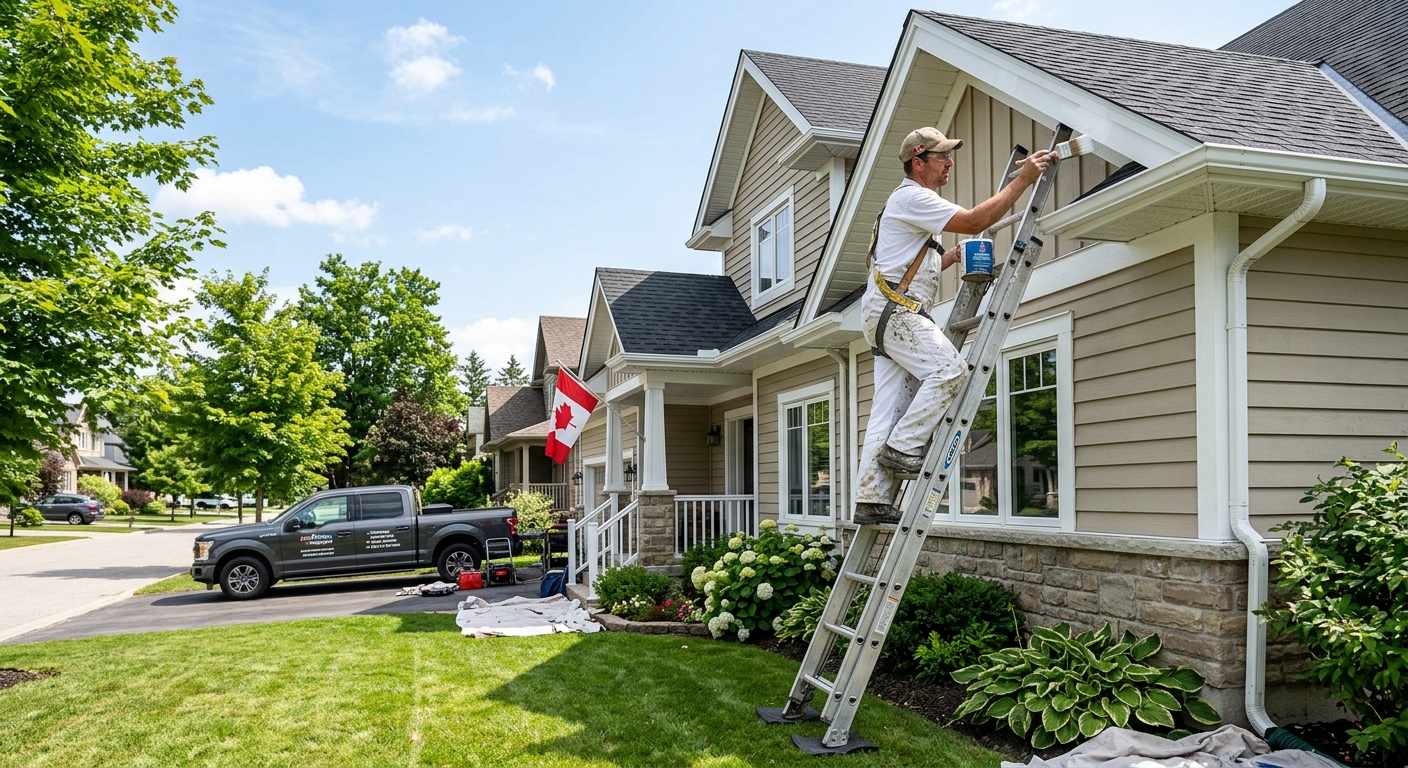
Painting options and costs in High Prairie
High Prairie homeowners have a lot of choices when it comes to paint, but the real cost story starts with what you’re protecting. In this area, 56.2% of homes were built before 1981, and those older substrates often need more prep—scraping, patching, caulking, and careful priming—before a finish coat will hold up. That prep time is one reason two “same-size” jobs can land far apart in price. It also matters because some pre-1978 homes may contain lead paint; pros handle that with safer work methods even when a permit isn’t required.
The Athabasca–Grande Prairie–Peace River region also shapes scheduling. Winters are long and shoulder seasons can be wet and unpredictable, so the true exterior window is typically late spring through early fall. When temperatures need to be safely above about 10°C and conditions stay workable for several days, contractor availability tightens and exterior pricing can rise during peak weeks. In practice, that’s why areas around downtown High Prairie and nearby older residential blocks can see quicker turnarounds for interior work, while exteriors get staged for the warmest stretches.
Below are realistic price bands you’ll see for common options in High Prairie, with typical durations to help you compare quotes apples-to-apples.
| Service |
What's Included |
Typical Duration |
Price Range |
| Interior — whole home (walls, ceilings, trim) |
Move-protected coverage, wall and ceiling prep (patch/sand), prime as needed, 2-coat finish on walls/ceilings, caulk/seal trim gaps, paint trim where included |
6–12 days |
$1,200 – $3,500 |
| Interior — per room (standard bedroom or living room) |
Prep and patching, 2-coat finish on walls, optional ceiling painting, light trim touch-ups if accessible |
1–3 days |
$400 – $1,200 |
| Exterior — full house (siding, trim, soffits) |
Powerwash/clean, scrape/sand, caulk gaps, spot-prime bare areas, prime when required, 2-coat exterior system, paint trim/soffits |
8–20 days |
$2,800 – $7,000 |
| Exterior — trim and accent colours only |
Cleaning, light prep, spot-priming as needed, 2-coat paint on trim/accents only (not full siding) |
4–10 days |
$1,200 – $3,800 |
| Kitchen cabinet painting (doors, frames, spray finish) |
Degrease, sanding/derusting, cabinet box and hardware protection, bonding primer, 2-coat sprayed finish, hardware reinstall |
5–12 days |
$900 – $2,500 |
| Specialty / faux finish (accent wall, texture) |
Surface stabilization, texture/faux build-up, priming for uniformity, finish coats to match chosen effect |
1–5 days |
$600 – $4,500 |
Prices are estimates only and vary by project scope, site access and material selection.
What affects the price of painting in High Prairie
In Athabasca–Grande Prairie–Peace River, quotes for the “same” project can vary by 30–50% because painters aren’t only pricing paint—they’re pricing risk, preparation, and scheduling pressure. For example, exterior work is tightly climate-bound in northern Alberta. While Ontario can have a similar overall window, Alberta’s colder snaps and fast weather swings mean contractors often need a short, reliable stretch where surfaces can dry and coatings can cure correctly. In coastal BC, the season can be longer, but high humidity and frequent rainfall push crews toward mildew-resistant systems and more careful day-to-day scheduling. In High Prairie, demand concentrates late spring through early fall, so summer rates can climb when multiple crews are already booked.
Age drives labour too. With many homes in the region built decades ago, repainting commonly involves more than a wash-and-roll. Scraping peeling areas, removing failed coatings, caulking and spot-priming can make up 50–70% of total labour on a repainting job—especially on older wood, fibre cement, or previously patched drywall. A common budget reality: a “good condition” repaint may sit closer to interior ranges like $400 – $1,200 per room, while a whole-home repaint with ceiling prep and widespread patching can push toward $1,200 – $3,500.
Concrete examples in High Prairie: (1) failing caulking around windows and doors increases time because we remove and re-seal before painting to reduce water ingress; (2) homes with lots of trim or multi-storey fronts require more setup, which changes whether a job is done in a straight run or needs scaffold/lift rentals. With 56.2% of homes pre-1981, expect more prep on both exterior and interior surfaces, which is a direct cost driver in the $1,200–$7,000 exterior bands.
| Price Factor |
Why It Matters |
Cost Impact |
| Surface prep — scraping, sanding, patching drywall or wood |
Preparation determines adhesion and durability; older coatings and damaged drywall need more labour |
Often the largest line item; can swing 20–40% of the total |
| Number of coats — 2-coat system over primer vs. 1 coat over existing |
Unnecessary coats waste time, but missing coats leads to flashing, uneven sheen, and early failure |
Typically adds 10–25% depending on how much priming is required |
| Paint quality tier — contractor-grade vs. premium (Benjamin Moore, Sherwin) |
Higher-tier paints can cover better, resist scuffing/UV better, and reduce rework |
Material difference can be moderate, but total cost impact is often 5–15% |
| Ceilings and trim — adds significant time vs. walls-only |
Edges, corners, and trim require cutting-in, masking, and more controlled drying |
Can increase interior scope 15–35% |
| Exterior season window — short season raises summer rates |
Weather constraints concentrate demand and limit crew availability |
Can add 10–30% during peak weeks |
| Lead-safe precautions — required for pre-1978 homes with lead paint |
Safer sanding/containment and HEPA cleanup take extra steps and time |
Often adds 5–20% depending on conditions and extent of scraping |
| Surface material — drywall vs. plaster vs. wood vs. stucco |
Different materials need different bonding/primers and prep methods |
Can swing 10–25% based on adhesion challenges |
| Height and access — multi-storey exterior requires scaffolding or lifts |
More setup, safety time, and protection increase labour and equipment costs |
Commonly adds 15–40% on larger fronts |
Permits & regulations in Alberta
In Alberta, painting generally does not require a permit for typical interior or exterior repainting. That said, the rules around health and safe work practices change the way professional contractors approach older homes. For homes built before 1978, health guidelines recommend testing for lead paint before sanding or scraping, and following lead-safe methods if lead is present. For professionals, that typically means using wet methods to reduce dust, HEPA vacuuming, containment and safe disposal of debris. This isn’t usually a legal requirement for homeowners, but it’s standard practice for contractors to protect occupants and workers.
What does require attention (not usually a “permit,” but a compliance step) is any work that creates airborne dust from older lead-painted surfaces. If a job involves aggressive scraping, sanding, or mechanical removal, that’s where lead-safe procedures become critical. Also confirm your contractor carries liability insurance and provides workers’ compensation coverage (WSIB/WCB) for employees.
To protect yourself in High Prairie, verify these items step-by-step: (1) ask for their current certificate of liability insurance and confirm the effective dates; (2) ask for proof of workers’ compensation coverage (WSIB/WCB account proof); (3) request a written quote or contract that specifies paint brand, sheen, number of coats, and what prep is included; (4) confirm who handles disposal of sanding/dropping debris and any plastic containment used. Finally, keep the contract that states surface prep scope, including scraping/priming triggers.
Interior vs exterior painting — getting the best result in High Prairie
The biggest difference between a long-lasting paint job and a premature failure in High Prairie is prep quality, not just brand. For interiors, filling, sanding, and priming control how smooth the finish looks and how well it resists peeling. If the walls are stained, patched, or there’s new drywall, primer is what seals those conditions; sheen also matters. Flat paint hides imperfections best in low-traffic areas, while eggshell or satin is typically better for hallways, family rooms, and kitchens because it cleans more easily. A practical rule: two coats over the right primer almost always outlast one thick coat, especially where homeowners expect scuff resistance.
Exteriors demand the same thinking, plus weatherproofing. In northern Alberta’s seasonal swings, exterior prep is where systems succeed: thorough cleaning, scraping failing areas, and caulking before painting so water can’t get behind finishes. Primer selection matters by substrate—wood and fibre cement often need different bonding/primers to prevent peeling. Unlike coastal BC where mildew resistance and humidity control are top concerns, Alberta’s priority is temperature-stable curing and UV durability, so coatings must be appropriate for our outdoor conditions. For pre-1978 homes, lead-safe precautions may apply if scraping or sanding is required.
Kitchen cabinets are a strong budget alternative to replacement. Cabinet painting typically sits within the cabinet band (often around $900 – $2,500), while full replacement usually costs far more and can mean months of disruption. A common “value” example: choosing a proper bonding primer and two sprayed finish coats might push toward the higher end of the cabinet band, but it’s usually worth it versus paying for extra touch-ups later.
| Project Type |
Key Prep Step |
Recommended Coats |
Price Band |
| Interior — fresh drywall (new construction) |
Seal/prime drywall and sand for uniform absorption before finish |
1 primer + 2 finish coats |
$1,200 – $3,500 |
| Interior — repaint (good condition, no repairs) |
Clean/scuff-sand and caulk minor gaps; spot-prime only |
2 finish coats (spot-prime as needed) |
$400 – $1,800 |
| Interior — repaint (patching and priming needed) |
Patch, sand, spot-prime problem areas for adhesion and colour uniformity |
1 primer + 2 finish coats (system dependent) |
$1,000 – $3,000 |
| Exterior siding (wood or fibre cement) |
Scrape failing coating areas, caulk cracks, clean and spot-prime bare spots |
2-coat exterior system over primer where required |
$2,800 – $7,000 |
| Exterior trim and accents only |
Masking/edge control plus spot-priming for adhesion on trim edges |
2 coats over appropriate primer/spot-prime |
$1,200 – $3,800 |
| Kitchen cabinets (spray finish) |
Degrease thoroughly and use a bonding primer before sprayed topcoat |
1 bonding primer + 2 sprayed finish coats |
$900 – $2,500 |
How to choose a painting contractor in High Prairie
Choosing the right painter in High Prairie starts with checking the basics and getting everything in writing. Ask for proof of liability insurance (for property damage) and workers’ compensation coverage (WSIB/WCB) if they have employees. How to check: (1) request a current insurance certificate showing your address or at least naming the policyholder and effective dates; (2) confirm WSIB/WCB coverage through documentation they provide—don’t accept “we’re covered” without paperwork; (3) if they claim certifications for coatings or lead-safe practices, ask for the specific training and process they’ll use for your surfaces.
Next, get 2–3 itemised written quotes. You want labour and materials breakdown, not just a lump sum. Scope clarity is crucial: what’s included for prep, caulking, primer, sanding level, and disposal? Also ask whether permit pulls are included if they ever apply for your specific circumstances (most repaint work doesn’t, but a contractor should explain what they will and won’t handle). For timelines, insist on a start date and an estimated completion date in writing, because exterior work is weather-sensitive.
Warranty and payments matter too. Look for a workmanship warranty length and whether the manufacturer warranty transfers if you sell the home. Payment schedule should protect you: never pay more than about 10–15% upfront, and hold back a portion until the job is complete and cleaned. On larger exterior projects priced in the $2,800 – $7,000 band, that holdback is especially important.
- Ask for liability insurance certificate and verify dates
- Confirm WSIB/WCB coverage for employees (request proof)
- Require itemised quotes: labour, materials, prep, primer, number of coats
- Clarify surface prep triggers (what happens if more damage is discovered?)
- Confirm caulking and masking protection details
- Ask who handles prep debris disposal and cleanup
- Verify paint brand and sheen for each surface (walls, trim, ceilings)
- Request a written schedule that accounts for Alberta weather (curing/temperature)
- Confirm lead-safe procedures if scraping/sanding pre-1978 materials
- Check warranty: workmanship length and any limits
- Discuss payment terms and agree on final holdback
- Look for a walkthrough and a written “assumptions” list before starting
Red flags I see in High Prairie: (1) quotes that ignore surface prep (no mention of scraping, sanding, caulking, or priming triggers); (2) no proof of WSIB/WCB coverage or insurance; (3) “we’ll just add another coat” instead of addressing adhesion problems; (4) vague scope like “paint exterior” without listing what areas are included (soffits, trim, details); (5) asking for a large upfront deposit with no written contract or schedule.
Frequently asked questions — painting in High Prairie
Should I paint or replace my cabinets?
If your cabinet boxes are structurally solid, painting is usually the smarter first step in High Prairie. Replacing cabinets can cost far more and typically involves more demolition, dust, and time away from your kitchen. Painting (doors and frames with a sprayed finish) can be a budget alternative and often lands in the cabinet painting range of $900 – $2,500, depending on how much prep, sanding, priming, and hardware change is needed.
Paint works best when doors are not warped, hinges align well, and the finish isn’t failing from moisture damage. A good contractor will test for adhesion and look at grease buildup (common near stoves) because prep is what makes the new coating last. If boxes are swollen, severely damaged, or mould-affected, replacement may still be the correct option.
How do I prep walls before painting?
For the best outcome in Alberta homes, prep is the difference between a paint job that looks great for years and one that peels or flashes. If you’re prepping yourself, start with cleaning: wash off grease, dust, and any residue (especially kitchens) and let surfaces fully dry. Fill holes and cracks with patching compound, sand smooth, and wipe away dust. Then address sheen and stains: if you have water stains, nicotine stains, or a patched area that “dries different,” primer is usually required so the topcoat colour stays uniform.
In High Prairie’s older housing stock—many homes built before 1981—previous paint failures can exist under intact surfaces, so a careful sanding/scuff and a spot-prime approach is important. If you see peeling or flaking, don’t paint over it—remove loose material, then prime. A contractor quote should spell out prep steps and the primer/caulk work included.
Do I need to worry about lead paint in an older High Prairie home?
It’s smart to think about it, especially when the home is older. In High Prairie, a meaningful share of housing was built before 1981 (56.2% per the 2021 Census profile), and pre-1978 homes are the ones where lead paint concerns are most relevant. For professional contractors, health guidance recommends testing when sanding or scraping might create dust, and using lead-safe work methods if lead is present—wet methods, HEPA vacuuming, containment, and safe disposal.
While Alberta typically doesn’t require a permit for painting, lead-safe precautions are a standard practice for pros when they’re dealing with surfaces that may contain lead. If your painter intends to scrape or sand, ask whether they test or how they manage lead risk, what containment/HEPA cleanup is used, and how debris is disposed of. That’s where the safety difference shows up in the final cost and quality.
How long does it take to paint a house?
Timing depends on interior vs exterior, the condition of surfaces, and how weather affects curing. For interiors, repainting a per-room scope is often 1–3 days, while whole-home interior work commonly takes 6–12 days due to moving protection, patching, drying time, and trim detail.
Exteriors in the Athabasca–Grande Prairie–Peace River region are more schedule-sensitive because the effective painting window is shorter. Crews usually need stable warm periods (commonly above about 10°C and rising) for proper application and curing, so projects can take 8–20 working days spread across favourable weather. In High Prairie, that means a “calendar estimate” depends on when rain and cold snaps occur.
A reliable contractor will provide a written start date, daily work plan, and realistic completion estimate based on temperature and drying times—not just optimistic dates.
What's the difference between paint quality tiers?
Paint “tiers” mainly differ in how well the coating covers, its durability, and how forgiving it is on real-world surfaces. Higher-tier paints often have stronger binders, better pigment packages, and better stain/scuff performance, which can reduce the number of coats needed to achieve uniformity—especially on older walls, patched drywall, or stained areas. In northern Alberta exposure, UV resistance and scrub resistance also matter, because exterior sun and interior wear can reveal thin coverage.
That said, you’ll still get the best results when primer and prep are done correctly. Even premium paint can fail if caulking is skipped, adhesion prep is poor, or failed coatings aren’t scraped. When comparing quotes, ask for the exact brands and sheen. A move from mid-tier to premium might shift material cost, but the real difference shows up in longevity and fewer touch-ups.
How do I compare painting quotes?
Start by comparing like-for-like scopes. Ask each contractor for an itemised quote that lists prep work (scraping, sanding, patching), caulking, primer type, number of coats, paint brand, and sheen for each surface. If one quote is much lower, it often misses prep or includes fewer coats—common issues that lead to peeling, flashing, or rough edges later.
For reference, interior per-room painting often lands around $400 – $1,200, while full exterior painting is commonly in the $2,800 – $7,000 range for a full house depending on condition, height/access, and substrate. Make sure the quote matches the same level of coverage (soffits/trim included or not), and confirm disposal and cleanup responsibilities.
Finally, verify insurance and WSIB/WCB coverage, confirm warranty terms, and ensure the payment schedule is sensible (no more than about 10–15% upfront, with holdback until completion).