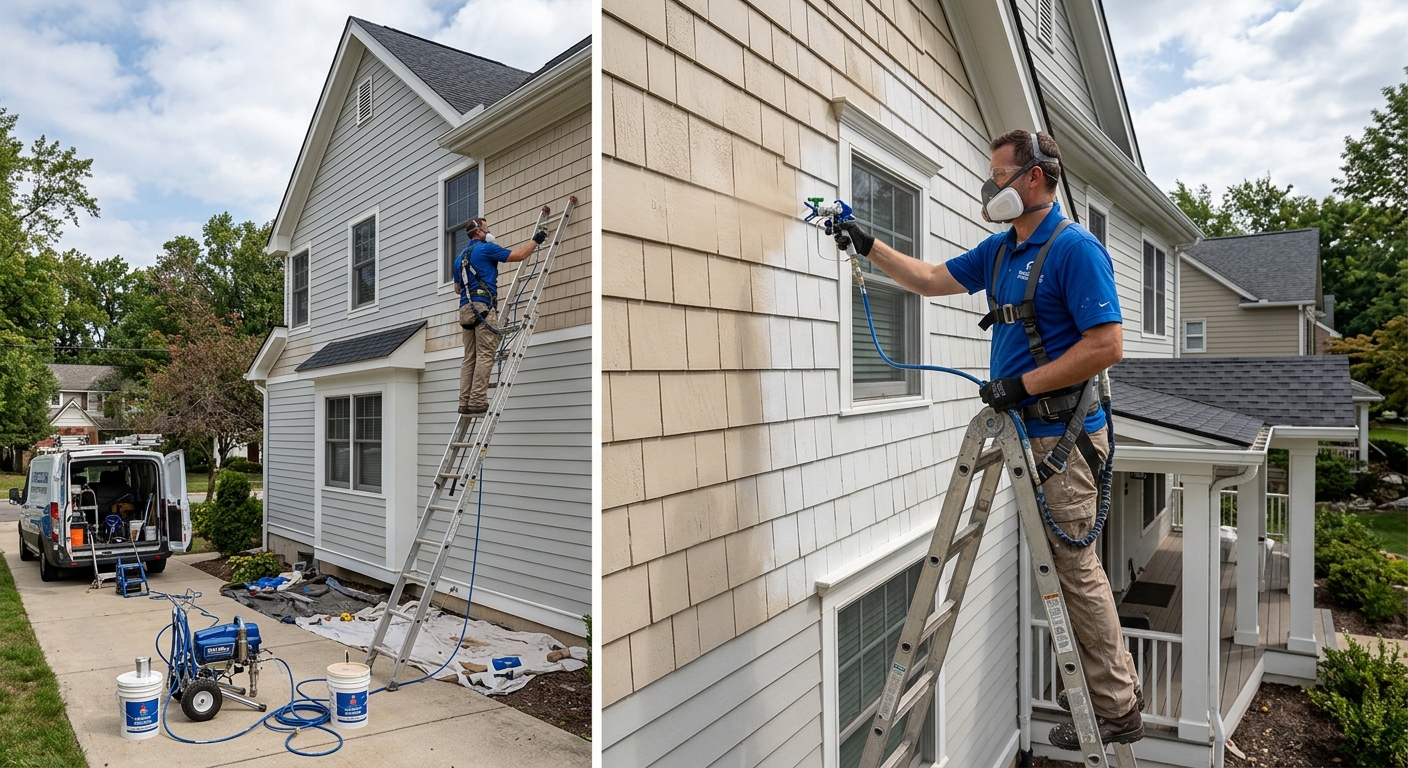
Painting options and costs in Duggan
Duggan homeowners have a lot of choices, but the “right” one usually comes down to how much prep is needed and how tight the weather window is for exterior work. Duggan’s population was 4,530 in 2021 (Statistics Canada, 2021 Census), and that relatively compact local market means fewer crews can be on-site at the same time—especially during peak summer demand when exterior schedules book quickly. Also, across the Calgary region, many homes date from the 1960s–2000s, so repaint projects often involve more scraping, patching, caulking, and priming than newer builds. In the pre-1978 portion of older housing stock, contractors may use lead-safe work practices if testing indicates paint with lead, which adds time to prep and cleanup. (Statistics Canada doesn’t publish lead-paint share for Duggan specifically, so the exact trigger depends on your home.)
In Calgary, the climate shapes both product choices and labour timing. Exterior painting is typically workable from about mid-May to late September, when daytime highs reliably stay above 10°C and surfaces can dry properly. Freeze–thaw cycles, strong UV, and hail risk push us toward high-quality acrylics and elastomeric or flexible coatings for exterior systems. Interiors are less weather-dependent, but costs still rise with ceiling height, access, trim density, and repair scope. The market also tightens in summer, so you’ll often see firmer pricing than you would in shoulder months.
Below are common options we quote in Duggan, including whole-home interiors, room-by-room work, and exterior systems that account for Calgary-region weather and typical housing age. Use the table as a baseline, then we’ll refine it after a quick site walk.
| Service |
What's Included |
Typical Duration |
Price Range |
| Interior — whole home (walls, ceilings, trim) |
Protect floors/furniture, patch & sand, prime where needed, caulk trim gaps, paint walls and ceilings, paint interior trim, clean-up and final touch-ups |
5–10 working days |
$2,200–$7,500 |
| Interior — per room (standard bedroom or living room) |
Prep and protect, patch & sand, spot prime as required, paint walls, paint ceiling, caulk and paint trim (unless noted) |
1–3 working days |
$450–$1,600 |
| Exterior — full house (siding, trim, soffits) |
Power wash/degrease as needed, scraping & patching, caulk where required, prime bare/problem areas, paint siding and exterior trim/soffits, final clean-up |
1–3 weeks (weather dependent) |
$4,500–$8,500 |
| Exterior — trim and accent colours only |
Surface prep on trim only, prime bare spots, caulk gaps, paint trim/accents and spot blend at transitions |
3–7 working days |
$2,500–$6,000 |
| Kitchen cabinet painting (doors, frames, spray finish) |
Degrease/clean, remove hardware (as directed), sand & bond prime, spray finish for a smoother look, light reassembly, protective finishing |
5–12 working days (dry/cure time) |
$1,800–$5,500 |
| Specialty / faux finish (accent wall, texture) |
Surface prep for finish durability, system-based primer, application of accent/texture, masking and detailing, clean-up and protective handling |
2–6 working days |
$600–$3,800 |
Prices are estimates only and vary by project scope, site access and material selection.
What affects the price of painting in Duggan
In Duggan and the broader Calgary area, two quotes for “the same” painting job can vary by 30–50% because prep complexity and access requirements are rarely identical. Labour pricing is also influenced by the short exterior season: when workable weather runs from mid-May to late September, contractor schedules tighten, materials are in higher demand, and crews prioritize jobs with the best weather-readiness. In Ontario and Alberta, exterior painting generally needs daytime temperatures above about 10°C and proper drying time; coastal BC often has a longer calendar, but higher humidity and rain require strict timing and mildew-resistant systems. That difference matters because it affects how long projects take and how many days are “standby” for weather.
Older homes across the Calgary region mean repainting can include extensive surface prep—scraping loose paint, sanding rough areas, patching drywall or wood, caulking, and priming stain-prone spots. On many repaints, surface prep can be 50–70% of total labour. For example, if your siding shows flaking paint or you have patch repairs, you may land closer to the upper end of exterior pricing (often around the $4,500–$8,500 band for a full exterior). If the surfaces are sound and you’re mainly refreshing trim colours, you might stay nearer the lower end of trim-only work (often $2,500–$6,000).
Two practical examples from Duggan: (1) freeze–thaw can widen small cracks around trim and corners, so prep and caulking become non-negotiable for lasting results; (2) if you’ve got heavy smoke/grease staining in an older interior, we’ll typically use bonding primers to lock it down, which adds cost but prevents bleed-through. The key is that the “cheapest-looking” quote usually misses either labour-heavy prep or the correct primer/coating system for your substrate and condition.
| Price Factor |
Why It Matters |
Cost Impact |
| Surface prep — scraping, sanding, patching drywall or wood |
Paint fails first at weak adhesion; prep controls durability |
Can add 20–60% to labour on repaints |
| Number of coats — 2-coat system over primer vs. 1 coat over existing |
Coverage and uniformity depend on sheen, colour change, and substrate |
Typically shifts pricing by 10–25% |
| Paint quality tier — contractor-grade vs. premium (Benjamin Moore, Sherwin) |
Higher solids and better pigment coverage reduce rework and touch-ups |
Materials may rise, but full-job cost can stay controlled |
| Ceilings and trim — adds significant time vs. walls-only |
Cut-in time, masking, and detail work is labour intensive |
Often adds 15–40% depending on rooms |
| Exterior season window — short season raises summer rates |
Weather delays compress schedules and increase demand |
Can increase summer labour rates meaningfully |
| Lead-safe precautions — required for pre-1978 homes with lead paint |
Testing and safe handling affect time, containment, and disposal |
Can add 10–30% if lead-safe protocols are required |
| Surface material — drywall vs. plaster vs. wood vs. stucco |
Different porosity and bond requirements change primer and labour |
May change cost by 10–35% |
| Height and access — multi-storey exterior requires scaffolding or lifts |
Access equipment and safety time increase labour and overhead |
Can add 20–50% on taller homes |
Permits & regulations in Alberta
In Alberta, painting work typically does not require a permit. What usually does drive “compliance” is the condition of the existing coatings and the safety practices required for older homes. If your home was built before 1978, health guidelines recommend considering lead paint testing before sanding or scraping and following lead-safe work practices if lead is found. For professionals, that means using wet methods to reduce dust, HEPA vacuuming, proper containment when necessary, and disposal procedures that align with safe handling. For homeowners, it isn’t automatically a legal requirement to do lead testing before DIY painting, but it’s standard practice for licensed, safety-minded contractors.
Before you sign in Duggan, confirm your contractor carries liability insurance and has WSIB/WCB workers’ compensation coverage for their employees (this protects you if someone is injured on-site). Ask for a written contract that clearly spells out paint brand and sheen, the number of coats, the surface prep steps included (scrape/sand/prime/caulk/patch), and what’s excluded (for example, removing or replacing damaged building materials).
To verify credentials step-by-step: (1) check the provincial contractor licensing registry (where applicable for the contracting entity) using the contractor’s legal name/business profile; (2) request your contractor’s certificate of liability insurance and confirm it’s current and matches the worksite address; (3) request proof of WSIB/WCB coverage for the company; and (4) keep those documents with your signed contract. A clear written scope reduces disputes about whether prep and disposal are included.
Interior vs exterior painting — getting the best result in Duggan
In Duggan, the difference between a long-lasting paint job and a premature failure is mostly prep and system choice, not just the brand on the label. For interiors, the biggest durability drivers are surface prep (filling and sanding, then priming problem spots), and the right sheen for the room’s wear level. We routinely see failures when homeowners choose one “glossy” product everywhere or skip proper primer over stains, patched drywall, or uneven surfaces. In practice, two coats over a properly primed base almost always outlasts one thick coat—especially where you have contrast between old and new colours.
For exteriors in the Calgary market, success comes from treating water control like a first priority. We caulk before painting to prevent water ingress behind trim and at corner seams, and we don’t paint over unaddressed failures (like bubbling or chalking) without correcting the cause. Primer selection matters: latex primers are often used over many sound painted substrates, while oil-based or other bonding primers may be specified for certain conditions—like significant stain or problematic adhesion—depending on what’s on your house. Products also need to tolerate Alberta’s strong UV and the temperature swings that drive freeze–thaw movement.
Cabinet painting is a smart budget alternative to replacement when your boxes and doors are structurally sound. A properly degreased and bonded spray finish can refresh a kitchen without the cost and mess of full renovation, but it still requires multi-step prep and cure time. For pre-1978 Duggan homes, lead-safe precautions (testing and safe handling where indicated) should be planned into the timeline so you’re not rushing scraping and cleanup.
One dollar example: if a full repaint pushes you toward the higher end of interior whole-home pricing (for many homes, that can sit above $2,200–$7,500 depending on prep and trim scope), the extra cost is often justified when ceilings and trim are included and when patching/priming are done properly. Conversely, if your exterior is in decent shape and you’re only refreshing trim and accents, you can often stay closer to the lower trim-only band ($2,500–$6,000) without paying for a full recoat of every surface.
| Project Type |
Key Prep Step |
Recommended Coats |
Price Band |
| Interior — fresh drywall (new construction) |
Prime bare drywall, fill joints/imperfections, sand smooth |
Primer + 2 top coats |
$400–$3,000 |
| Interior — repaint (good condition, no repairs) |
Clean/de-gloss, spot prime any scuffs or stains |
2 top coats (spot primer only if needed) |
$450–$2,200 |
| Interior — repaint (patching and priming needed) |
Patching, sanding, caulking, and bonding primer on repairs/stains |
Primer + 2 top coats (system-based) |
$650–$3,800 |
| Exterior siding (wood or fibre cement) |
Scrape loose paint, repair gaps, caulk, prime bare/problem areas |
Primer + 2 exterior top coats (or 2 coat system as specified) |
$4,500–$8,500 |
| Exterior trim and accents only |
Spot prep and prime on bare spots; caulk trim joints |
1–2 coats depending on colour change and coverage |
$2,500–$6,000 |
| Kitchen cabinets (spray finish) |
Degrease thoroughly, sand/bond prime, mask and spray for even film build |
Bonding primer + 2 finish coats (often with cure between) |
$1,800–$5,500 |
How to choose a painting contractor in Duggan
Choosing the right painting contractor in Duggan starts with verification, not promises. First, confirm Alberta licensing status where applicable for the contractor’s legal entity, and ask for a current certificate of liability insurance—make sure the coverage is active and includes work of the type being quoted. Next, verify WSIB/WCB workers’ compensation coverage for employees; you can request proof directly before the job starts, and a reputable contractor will provide it without hesitation. If they push back or can’t provide documents, treat it as a serious risk.
Then get 2–3 itemised quotes. Look for a breakdown that separates labour from materials and specifies what’s included: scraping, sanding, patching, priming, caulking, number of coats, paint brands/lines, disposal, and surface protection. Be cautious of lump-sum estimates that don’t list surface prep—on repaints, that’s where most budget swings happen.
Warranty matters too. Ask for the workmanship warranty length, whether the product/manufacturer warranty is included, and if any warranty is transferable if you sell your home. Finally, payment schedules should be conservative: never pay more than about 10–15% upfront. Use a holdback until the job is complete and the final walk-through is signed off. Get a written timeline with a start date and completion estimate that reflects Alberta’s exterior weather reality—if it’s an exterior job, ask how they handle rain or overnight temperature drops.
- Request contractor’s legal business name and confirm matching documents (insurance/coverage) to that name.
- Verify liability insurance certificate is current and covers the scope you’re hiring for.
- Confirm WSIB/WCB coverage for workers before work begins.
- Ask for an itemised quote (labour vs materials) and not just a total.
- Check the scope: scraping, patching, sanding, caulking, priming, and disposal—explicitly listed.
- Confirm paint brand and line, sheen level, and exact number of coats.
- Ask who is responsible for surface cleaning (power wash/degreasing) and what “as needed” means.
- Require details on masking and floor/wall protection.
- Get start date and completion estimate in writing, including weather contingency for exteriors.
- Set a payment schedule with only 10–15% maximum upfront and progress milestones.
- Review the warranty: workmanship term, exclusions, and product warranty conditions.
- Ask for a cleanup plan and final touch-up process before you approve payment.
Red flags I see in Duggan include contractors who: won’t share insurance/WSIB documentation, give only a lump-sum with vague prep (“we’ll prep as needed”), promise a full exterior in a single short stretch without weather contingency, insist on a large upfront deposit (beyond 10–15%), or can’t explain the paint system (primer type and number of coats) for your siding/trim.
Frequently asked questions — painting in Duggan
How many coats of paint do I need?
In Duggan and across the Calgary region, most properly prepared interior repaint jobs use two top coats over a suitable primer. If you’re painting fresh drywall or have patched areas, you typically need primer plus two finish coats to avoid flashing and uneven sheen. For exteriors, the safe baseline is usually a primer where needed (bare spots, repairs, and problematic adhesion) and then two exterior top coats to achieve the durability you expect through UV exposure and freeze–thaw. If a quote is only proposing one coat “because it looks fine,” that’s where you often see early wear. For budgeting, a standard interior whole-home range commonly sits around $2,200–$7,500, while room work is often $450–$1,600—the coat count and primer decisions are a major reason costs differ.
What paint is best for Duggan's climate?
For Duggan’s climate, exterior coatings need good UV resistance, flexibility, and strong adhesion because Calgary winters bring temperature swings and freeze–thaw effects. We typically select high-quality acrylics for most exterior systems and use elastomeric or flexible coatings where the surface condition calls for it (for instance, certain siding/trim gaps or micro-cracking patterns). Primers matter just as much: they’re chosen based on substrate and condition (wood, fibre cement, or previously painted surfaces) to lock in adhesion and prevent tannin or stain bleed. For interiors, the “best” paint is often about correct sheen by room—flat or eggshell for living areas, and more scrubbable finishes where there’s more cleaning (e.g., kitchens/hallways). If you’re budgeting around exterior work, the full-house band often runs about $4,500–$8,500, reflecting the higher material and prep requirements for weather-ready systems.
How long does exterior paint last here?
Realistic exterior longevity in Alberta depends on prep quality and coating system, not just the brand. In Duggan, a well-prepped exterior that’s primed correctly and painted with a durable two-coat system can last multiple years, but the best outcomes typically require addressing adhesion issues early—scraping loose paint, repairing cracks, caulking trim joints, and priming bare or stained areas. If those steps are skipped, paint can fail sooner due to moisture entry and freeze–thaw movement. Timing also matters because exterior work is weather-bound; our workable window is usually mid-May to late September when drying conditions are dependable. If you paint in the shoulder season, cure and adhesion can be compromised. When planning your budget, homeowners often compare a full exterior refresh (often $4,500–$8,500) versus trim-only accents (often $2,500–$6,000) based on how much substrate repair is truly needed.
Should I paint or replace my cabinets?
In many Calgary-area homes (including Duggan), cabinet painting is the smarter choice when the box structure is solid, the doors are not swollen beyond repair, and you want a cost-controlled upgrade. Painting is also much faster than replacement and can keep your kitchen usable with proper scheduling and cure time. It becomes the wrong choice if your cabinets have water damage, structural warping, or widespread failing hardware that would require major rebuilds. The quality difference comes from prep: degreasing, sanding/bonding primer, and a smooth spray finish with adequate drying and cure. A cabinet project also has different realities than walls—masking and reassembly affect labour time. Budget-wise, cabinet painting commonly lands around $1,800–$5,500 depending on number of doors, finish complexity, and whether frames/updates are included. If you choose replacement, you’re paying for new materials and install labour, not just a surface finish.
How do I prep walls before painting?
If you’re asking about DIY wall prep in Duggan: start with cleaning—dust and cooking residue can prevent adhesion even if the paint “goes on smoothly.” Then address surface issues: fill holes and cracks, sand them flush, and wipe off sanding dust. Caulk gaps at trim edges if they’re separating or uneven. Spot prime any stains or patch areas—primer is what prevents bleed-through and flashing. Also check sheen: gloss or semi-gloss surfaces may need de-glossing so new paint can bond. Finally, confirm you have good ventilation and proper lighting to catch patch lines. That said, for the best results, contractors often include prep in the quote (scraping/sanding, patching, spot priming, and caulking). That’s a major reason prices differ: prep-heavy repaints are commonly the drivers of the higher end of interior ranges such as $2,200–$7,500 for whole-home work.
Do I need to worry about lead paint in an older Duggan home?
If your Duggan home was built before 1978, it’s reasonable to worry about potential lead paint, especially if you plan to sand, scrape, or disturb old trim and coatings. In Alberta, painting typically doesn’t require a permit, and lead-safe practices are not always legally mandated for homeowners; however, health guidelines recommend lead precautions if lead is suspected or if testing confirms it’s present. For professionals, lead-safe work practices are standard: wet methods to reduce dust, HEPA vacuuming, proper containment when needed, and careful disposal. A contractor should be able to discuss testing options and how they would approach safe prep and cleanup. If you’re signing a contract, make sure the scope addresses pre-1978 prep steps—this is one reason quotes can vary. The safest approach is to test or ask for a plan before scraping begins so you’re not redoing work later or risking contamination.